How to budget your salary in South Africa (with a template to download)
A step-by-step salary budget for South Africa: work out your take-home pay, list fixed and variable costs, track what you spend and review it on payday.
Published · Last updated
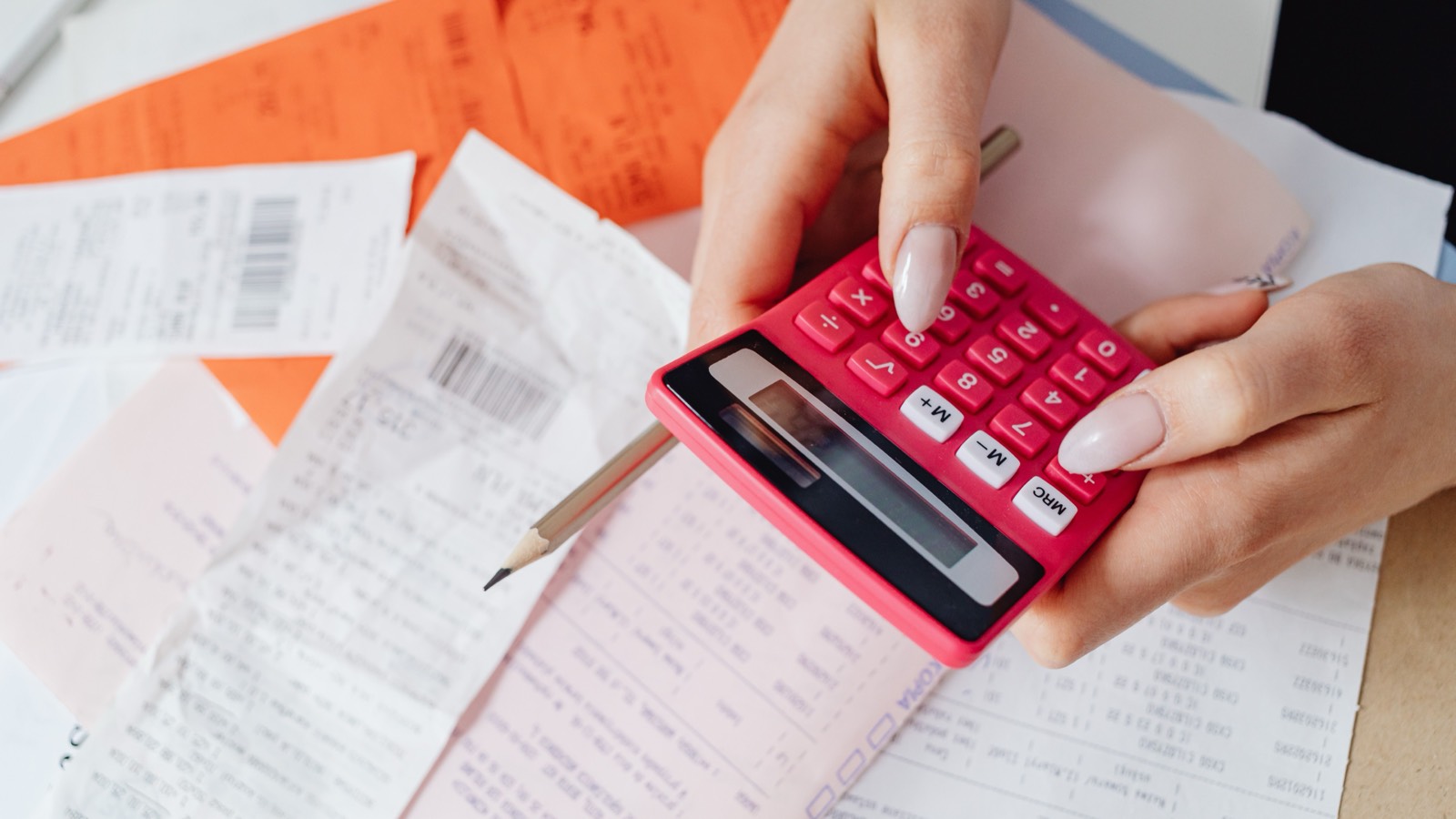
If your salary seems to vanish a week before the next one lands, you are far from alone. In Standard Bank's analysis of more than 402 000 of its salaried clients (published 22 October 2024), 28% had a negative balance or were using an overdraft the day before payday, and 21% had R1 000 or less. Those are one bank's clients, not every earner, and the figures are two years old, but the pattern will sound familiar.
This guide builds a salary budget in five steps, with a worked example in rand and a template you can download and fill in.
Download the template. The salary budget spreadsheet (.xlsx) opens in Excel and Google Sheets and does the sums for you. Prefer paper? Print the one-page PDF.
Why budget your salary at all
Most people do have a plan. It just doesn't survive the month. In the Old Mutual Savings & Investment Monitor 2026, a survey of 1 519 working South Africans earning R8 000 or more a month (done in April 2026, published in July 2026), 73% said they sometimes or often spend outside their monthly budget. Only 25% said often. Among those who do, the most common reasons were the rising cost of living (47%) and emergencies or unexpected expenses (36%).
Costs are not standing still either. The Household Affordability Index for October 2026 from the Pietermaritzburg Economic Justice & Dignity group (PMBEJD, released 28 October 2026) put its average household food basket at R5 512.53 a month, up from R5 488.06 in September. And in TransUnion's Consumer Pulse for the second quarter of 2026 (14 July 2026), 39% of South Africans said they expected to miss at least one bill or loan repayment.
A budget won't make your salary bigger. It shows you where the money goes while there is still time to change something, not on the day before payday when the account is already empty.
Step 1: Work out your take-home pay
Budget from what lands in your account, not from the salary on your contract. For most employees the two big deductions are income tax (PAYE) and the Unemployment Insurance Fund (UIF).
Income tax. For the 2027 tax year (1 March 2026 to 28 February 2027), SARS's rates of tax for individuals (page updated 28 October 2026) are:
| Taxable income per year | Tax |
|---|---|
| R1 to R245 100 | 18% of taxable income |
| R245 101 to R383 100 | R44 118 + 26% of the amount above R245 100 |
| R383 101 to R530 200 | R79 998 + 31% of the amount above R383 100 |
| R530 201 to R695 800 | R125 599 + 36% of the amount above R530 200 |
| R695 801 to R887 000 | R185 215 + 39% of the amount above R695 800 |
| R887 001 to R1 878 600 | R259 783 + 41% of the amount above R887 000 |
| R1 878 601 and above | R666 339 + 45% of the amount above R1 878 600 |
From that tax you subtract a rebate. The primary rebate, which every taxpayer gets, is R17 820 a year, which is why someone younger than 65 pays no income tax on R99 000 a year or less (R8 250 a month).
UIF. You pay 1% of your pay to the UIF, and your employer adds another 1% (SARS, page updated 19 August 2026). The 1% is worked out on no more than R17 712 a month, a ceiling that has applied since 1 June 2021, so the most UIF can take from you is R177.12 a month.
A worked example. Say your gross salary is R20 000 a month, or R240 000 a year, which sits in the first tax band:
| Per month | Per year | |
|---|---|---|
| Gross salary | R20 000.00 | R240 000.00 |
| Tax before the rebate: 18% of R240 000 | R43 200.00 | |
| Less the primary rebate | R17 820.00 | |
| PAYE | R2 115.00 | R25 380.00 |
| UIF: 1% of R17 712, the ceiling | R177.12 | R2 125.44 |
| Take-home pay | R17 707.88 | R212 494.56 |
That example is simplified. Medical scheme tax credits, retirement fund contributions, a travel allowance, a bonus or overtime all change the real figure, and many payslips carry other deductions, such as medical aid or a pension fund. Your payslip has the final word: use its net pay as your starting number.
Step 2: List your fixed costs
Fixed costs leave your account every month whatever else happens. Go through last month's bank statement and write each one down:
- Rent or bond repayment, plus levies or rates
- School fees, aftercare and school transport
- Medical aid and insurance premiums, if they don't come off your payslip
- Cellphone contract and home internet
- Transport you pay for up front, such as a monthly bus ticket or a lift club
- Money you send to family every month
- Subscriptions and memberships
Electricity deserves a line of its own, because its price rises every year. Eskom's 2026/27 tariff increase was 8.76% for its direct customers from 1 April 2026 and 9.01% for local-authority tariffs from 1 July 2026. What your municipality charges you can differ.
Then check your debit order dates against your payday. In the Old Mutual survey (April 2026), almost one in two working South Africans said they move money between accounts or hold back deposits to avoid or delay debit orders, and one in five do it regularly. If a debit order is collected before your salary arrives, ask the company that collects it whether the date can move.
Step 3: Estimate your variable spending
Variable costs change from month to month: groceries, toiletries and cleaning products, fuel or taxi fares, prepaid electricity, airtime and data, takeaways and outings. They are the easiest costs to underestimate.
Start from what you actually spent last month, not what you would like to spend. For groceries, a reference point: the PMBEJD's October 2026 index (28 October 2026) prices its basket of 44 foods for a low-income household of seven, and says plainly that the basket "is not nutritionally complete". Its cost of a basic nutritious diet for a family of four was R3 828.72 a month. Neither is a target; your household's real number is in your own slips.
Transport moves too. From 4 November 2026, the government's fuel price adjustment (announced 3 November 2026) cut petrol 93 and 95 by 1 cent a litre and 0.05% diesel by 109.82 cents a litre. Budget fuel or fares on a normal month, and look again when prices change.
A 50/30/20 split, adjusted for South Africa
A common rule of thumb splits take-home pay three ways: about 50% for needs, 30% for wants and 20% for savings and paying off debt. On the example's R17 707.88 that looks like this:
| Share | What it covers | Amount |
|---|---|---|
| 50% needs | Housing, food, transport, utilities, insurance, school fees | R8 853.94 |
| 30% wants | Eating out, outings, clothes beyond the basics, subscriptions | R5 312.36 |
| 20% savings and debt | An emergency fund, retirement, extra debt repayments | R3 541.58 |
Standard Bank's "Personal budgeting pointers" put the same idea as 50% for necessities, 20% for long-term savings and 30% for lifestyle, and the bank publishes a 50/20/30 budget template as a PDF (dated December 2025) that lists school fees and medical aid under needs. It's another layout to compare with ours.
Treat the split as a starting point, not a test you pass or fail. Back in 2019, FNB's head of money management told the Sowetan (19 December 2019) that the rule "may not be appropriate in South Africa as many things like groceries are cheaper in the US." On a low wage, needs alone can take far more than half. The PMBEJD's October 2026 index works it through for a worker on the national minimum wage of R30.23 an hour (Department of Employment and Labour, 3 February 2026; in force from 1 March 2026). Over 22 working days that is R5 320.48 a month, and two taxis to work and back (R2 112.00) plus prepaid electricity (R1 263.45) take 63.4% of it before any food is bought.
So write down your real percentages. If needs come to 65% of your take-home pay, the budget has done its job: it shows where the pressure is and what could move, whether that's a contract, a lift club or the grocery list.
Step 4: Track what you actually spend
A budget is a guess until you compare it with what really happened. Once a week, add up what went on each variable line. The template's Month tracker sheet has a column for each week and shows what is left of each line.
Your bank statement shows one amount per shop. A till slip shows every line: the bread, the nappies, the airtime bought with the groceries. Keep your slips, or photograph them before they fade. Popcorn, the app we make, reads a photo of a till slip line by line, so a household can see where the month went.
Step 5: Review on payday and at month-end
Two dates do most of the work.
On payday, pay the fixed costs and move the savings amount first, then split what's left across the weeks until the next payday. If you're paid on the 25th, your budget month runs from the 25th to the 24th, not from the 1st to the 31st.
At month-end, or the day before payday, put the budget and the actual amounts side by side. Which lines went over? Was it a one-off, or does the budget need to change? In the Old Mutual survey (April 2026), emergencies and unexpected expenses were the second most common reason people gave for spending outside their budget, so if something unexpected caught you out, give it a line of its own next month, even a small one.
Then adjust it and go again. Expect the first few months to need changes.
Questions people ask
How much should I spend on groceries?
There is no single right amount: it depends on how many people you feed and where you shop. Start from what your household actually spent over the last two or three months. As a reference point, the PMBEJD priced a basic nutritious diet for a family of four at R3 828.72 a month in October 2026.
Does the 50/30/20 rule work in South Africa?
As a starting point, yes. As a strict rule, often not: transport, electricity and food can take far more than half of a lower income. Use the split to see where you stand, then set percentages that fit your own costs.
How much UIF comes off my salary?
1% of your pay, worked out on no more than R17 712 a month, so never more than R177.12 a month (SARS, page updated 19 August 2026). Your employer pays the same amount again.
Should I budget from my gross or my net salary?
From your net, or take-home, pay: it's the money you can actually spend. Tax, UIF and anything else on your payslip has gone before your salary reaches your account.
This post is general information to help you budget. It isn't financial advice.
We wrote this with help from an AI writing assistant. Every figure links to the source it came from, checked on 15 November 2026.